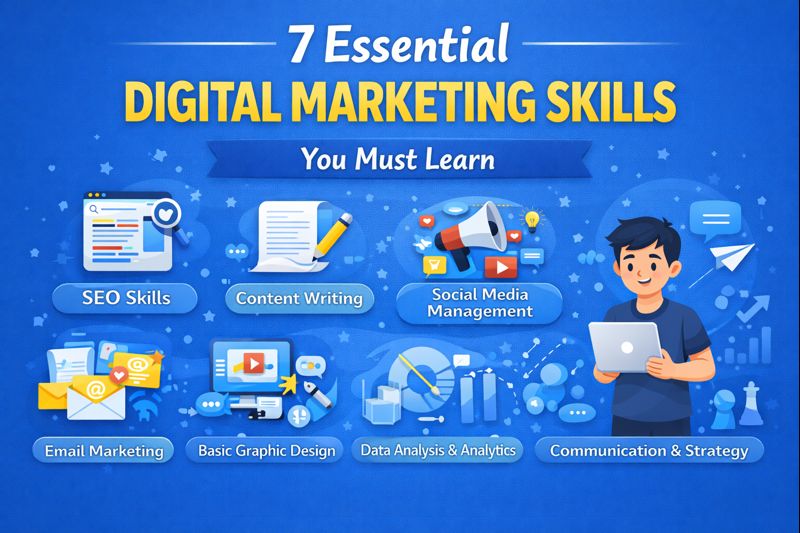
Digital marketing is not only about using tools or running ads. It is about understanding people, solving problems, and communicating clearly through digital platforms. Many beginners think they must learn many tools first, but strong fundamentals matter more than tools.
In this post, we will discuss the most important digital marketing skills every beginner should learn to build a strong foundation and grow step by step.
Understanding People and Their Problems
The most important skill in digital marketing is understanding people. Before creating any content or promotion, you must know who your audience is and what problems they are facing. People go online because they are looking for answers, solutions, or information.
When a marketer understands people well, it becomes easier to create content that truly helps. This skill helps you write better blogs, design better ads, and build long-term trust. Good marketing always starts with people, not products.
Content Creation Skills
Content is the backbone of digital marketing, it includes blog posts, social media posts, videos, emails, and guides. A beginner should focus on creating clear, simple, and helpful content.
You do not need perfect grammar or advanced writing skills in the beginning. What matters most is clarity. Content should answer questions in a simple way. Over time, as you write more, your content skills will naturally improve.
Helpful content attracts people and keeps them engaged.
Basic SEO Knowledge
Search Engine Optimization, or SEO, is an essential skill for digital marketers. SEO helps content appear in search engine results when people search for information.
Beginners should understand basic SEO concepts such as:
- How keywords work
- Writing clear headings
- Optimizing content for readability
- Understanding search intent
SEO is not about tricking search engines. It is about helping search engines understand your content so it can reach the right people.
Social Media Understanding
Social media platforms are powerful communication tools. Beginners should learn how different platforms work and how people behave on them. Each platform has a different style and audience.
For example, LinkedIn is more professional, while Instagram focuses on visual content. Understanding these differences helps you create relevant posts and engage with people in the right way.
Social media marketing is about building relationships, not just promoting products.
Analytical Thinking
Digital marketing allows you to measure results easily. Beginners should learn how to read basic data such as website traffic, clicks, and engagement.
Analytics helps answer important questions:
- Which content is performing well?
- Where are visitors coming from?
- What needs improvement?
This skill helps you make decisions based on data instead of guesswork.
Communication Skills
Clear communication is a powerful skill in digital marketing. This includes writing clearly, explaining ideas simply, and responding to feedback.
Good communication helps in:
- Creating better content
- Working with teams or clients
- Understanding audience needs
Marketing is not about using complex words. It is about making ideas easy to understand.
Learning Mindset and Adaptability
Digital marketing changes quickly. Platforms update their algorithms, new tools appear, and trends change. A good digital marketer is always ready to learn.
Beginners should build a habit of learning regularly. Reading blogs, watching tutorials, testing ideas, and improving skills over time leads to long-term success.
Adaptability is one of the most valuable skills in digital marketing.
Real-Life Example
Imagine a beginner managing a small business website. They write simple blog posts, optimize them for search engines, share them on social media, and check analytics every week. Over time, they see which content performs better and improve future posts.
This process helps them learn real skills through practice, not just theory.
Conclusion
Digital marketing skills are a mix of understanding people, creating helpful content, analyzing data, communicating clearly, and continuously learning. Tools may change, but these core skills remain valuable.
Learning digital marketing skills becomes more effective when we understand how these skills are applied in real situations. Many of these skills connect directly with how digital marketing works and are used across the different types of digital marketing explained earlier. Developing these skills requires both learning and practice, so theory alone is not enough. My clarity around these skills improved through structured learning and hands-on exposure during my digital marketing training at Broadway Infosys Nepal, where practical examples helped turn concepts into real, usable skills.